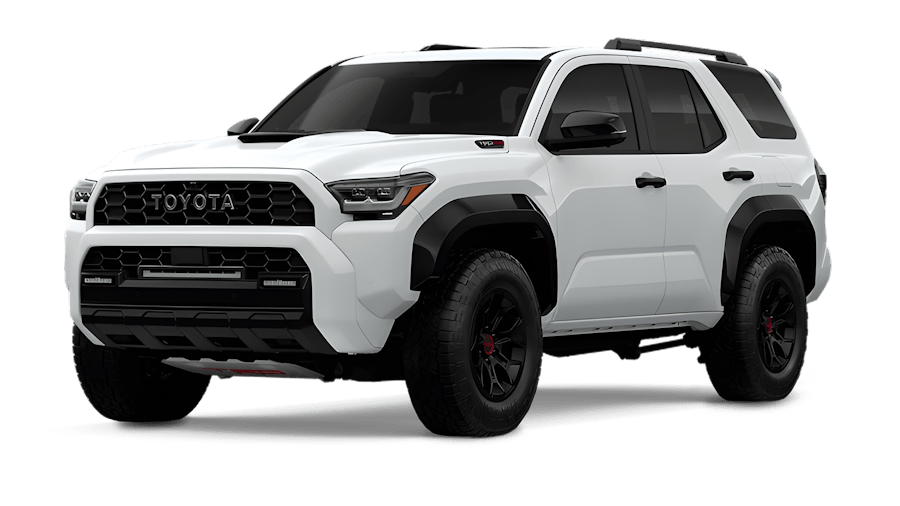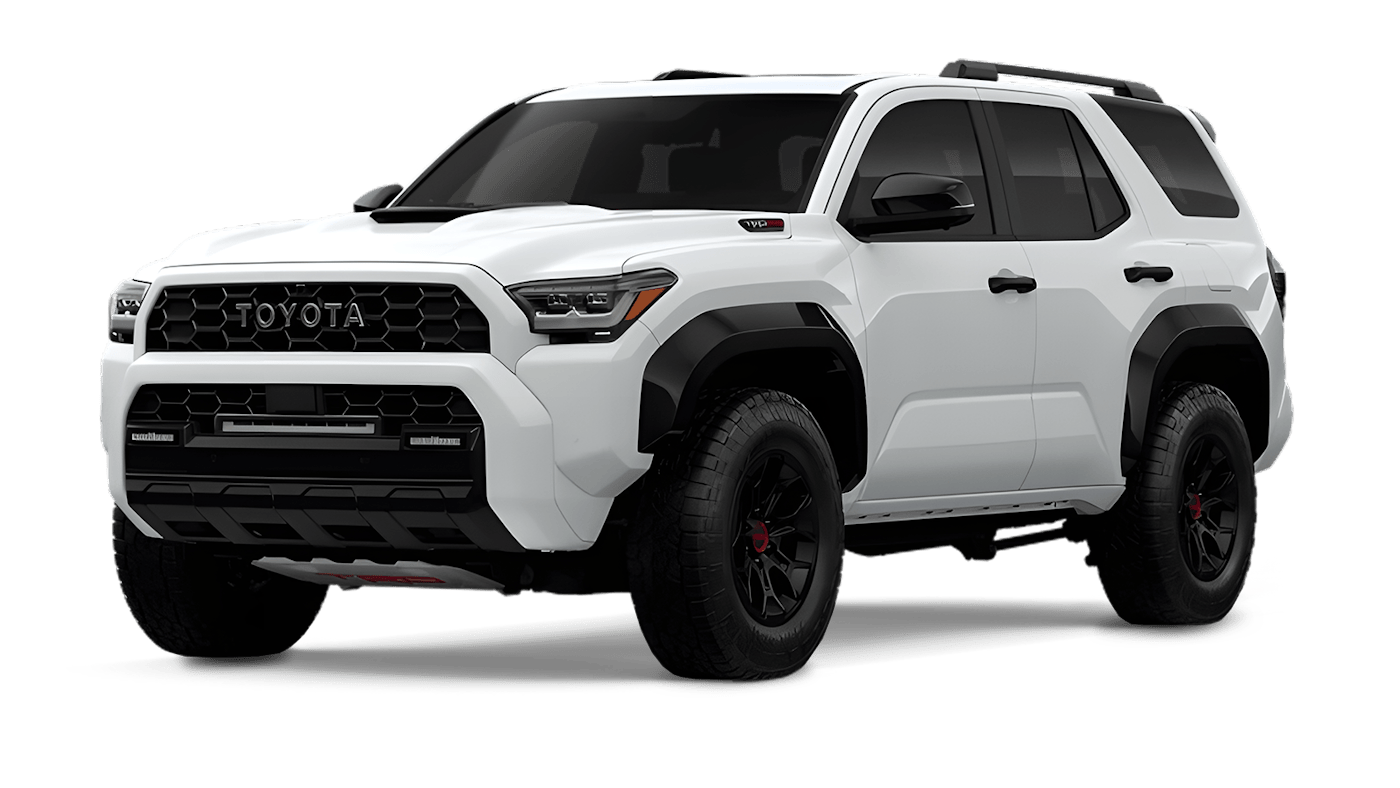
26 MPG
Up to an estimated 26 highway MPG with select rear-wheel-drive i-FORCE configurations.


How fuel-efficient is the Toyota 4Runner? Does the 4Runner require premium gas? Explore 2026 Toyota 4Runner MPG ratings, recommended fuel types, gas vs. hybrid performance, and practical ways to get more miles from every tank.
The 2026 Toyota 4Runner offers two turbocharged powertrains, including an available hybrid, with fuel economy that varies by drivetrain and configuration.
Up to an estimated 26 highway MPG with select rear-wheel-drive i-FORCE configurations.
The i-FORCE MAX hybrid delivers an estimated 23 combined MPG with four-wheel drive.
Regular unleaded gasoline is recommended for both gas and hybrid 2026 4Runner models.
Fuel economy figures are manufacturer-published estimates. Actual mileage varies by trim, drivetrain, vehicle condition, driving habits, terrain, and other factors. Rating details
Compare manufacturer-estimated city, highway, and combined fuel economy ratings for the 2026 Toyota 4Runner.
| Configuration | City MPG | Highway MPG | Combined MPG |
|---|---|---|---|
| i-FORCE Gas RWD SR5, TRD Sport, TRD Sport Premium | 20 | 26 | 22 |
| i-FORCE Gas 4WD SR5, TRD Sport, TRD Off-Road and applicable Premium trims | 19 | 25 | 21 |
| i-FORCE Gas Limited RWD | 20 | 24 | 22 |
| i-FORCE Gas Limited 4WD | 20 | 24 | 21 |
| i-FORCE MAX Hybrid 4WD Applicable hybrid trims | 23 | 24 | 23 |
Ratings shown are Toyota's published projected estimates for the 2026 model year. Confirm specifications for the exact vehicle before purchase.
Both 4Runner engines deliver turbocharged performance, but their fuel economy and driving characteristics differ.
Up to 26 Highway MPG
The standard i-FORCE engine produces up to 278 horsepower and 317 lb-ft of torque. It offers a strong balance of everyday driving capability, highway efficiency, and traditional gas-powered performance.
Up to 23 Combined MPG
The available i-FORCE MAX hybrid combines a turbocharged gasoline engine with electric motor assistance to deliver 326 horsepower and 465 lb-ft of torque.
The hybrid offers better estimated city fuel economy than comparable gas-powered 4WD configurations. However, select rear-wheel-drive gas models achieve higher estimated highway MPG. The hybrid's biggest advantage is its combination of additional torque and improved city efficiency.

The Toyota 4Runner has long been recognized for its rugged construction and off-road capability. The latest generation adds modern turbocharged powertrains designed to balance performance with improved fuel efficiency.
Whether you're commuting, traveling on the highway, or exploring challenging terrain, the 4Runner offers powertrain choices to match your priorities.
Drivers who prioritize highway fuel economy may prefer a rear-wheel-drive gas configuration, while those seeking additional torque and improved city MPG may appreciate the i-FORCE MAX hybrid.
Understanding the recommended Toyota 4Runner fuel type helps you refuel confidently and maintain proper engine performance.
The 2026 Toyota 4Runner is designed to operate on regular unleaded gasoline with an octane rating of 87 or higher.
Neither the standard i-FORCE engine nor the i-FORCE MAX hybrid requires premium gasoline for normal operation.
The 4Runner i-FORCE MAX is a conventional hybrid, not a plug-in hybrid. Its battery charges through the vehicle's onboard systems, so you do not need to plug it into an external charger.
Simple driving and maintenance habits can help maximize your 4Runner's fuel efficiency.
Gradual acceleration, steady speeds, and anticipating traffic can help reduce unnecessary fuel consumption.
Follow Toyota's recommended maintenance schedule. Proper engine care and timely inspections help keep your vehicle operating as intended.
Underinflated tires increase rolling resistance. Check tire pressure regularly and use the recommended pressure listed on your vehicle.
Carrying extra cargo requires additional energy. Remove unnecessary items and unused accessories when they are not needed.
Roof racks, cargo carriers, and oversized accessories can increase wind resistance and affect highway fuel economy.
Combining errands and avoiding unnecessary idling can help reduce fuel consumption during everyday driving.
Routine maintenance and properly selected replacement parts can help support long-term vehicle performance.
Regular inspections, scheduled maintenance, tire care, and engine service help keep your 4Runner ready for daily driving and future adventures.
Choosing parts designed for your Toyota helps maintain compatibility with your vehicle's specifications and supports proper operation.
Answers to common questions about Toyota 4Runner fuel economy, gasoline requirements, and hybrid performance.
The 2026 Toyota 4Runner offers manufacturer-estimated fuel economy ratings ranging from 19 to 23 MPG in the city and 24 to 26 MPG on the highway, depending on the powertrain and drivetrain. The i-FORCE MAX hybrid achieves an estimated 23 MPG combined.
No. The 2026 Toyota 4Runner is designed to use regular unleaded gasoline with an octane rating of 87 or higher. Premium gasoline is not required for the standard gas engine or the i-FORCE MAX hybrid.
The 2026 Toyota 4Runner i-FORCE MAX hybrid achieves an estimated 23 city, 24 highway, and 23 combined MPG. It offers improved city fuel economy compared with comparable gas-powered 4WD models while providing additional horsepower and torque.
No. The Toyota 4Runner i-FORCE MAX is a conventional hybrid. Its hybrid battery is recharged through the vehicle's onboard systems, including regenerative braking, so external charging is not required.
Select 2026 Toyota 4Runner rear-wheel-drive models equipped with the standard i-FORCE engine achieve an estimated 26 highway MPG. This is higher than the estimated 24 highway MPG rating of the i-FORCE MAX hybrid.
Yes. Four-wheel-drive configurations can have different fuel economy ratings than rear-wheel-drive models. For example, the standard i-FORCE SR5 is rated at an estimated 22 combined MPG with RWD and 21 combined MPG with 4WD.
Maintain proper tire pressure, accelerate smoothly, reduce unnecessary cargo weight, minimize idling, and follow the recommended maintenance schedule. Driving conditions, accessories, and terrain also influence real-world fuel economy.
Ready to compare Toyota 4Runner gas and hybrid models in person? Explore available inventory, learn more about 4Runner features, or contact our team for help finding the configuration that fits your driving needs.